ADVERTISEMENT
Instructions
Preheat your oven to 400°F (200°C). Lightly grease a 9×13 inch baking dish or line with parchment paper for easier cleanup.
Pat the chicken breasts dry thoroughly with paper towels. This helps them brown better and absorb flavor. Season both sides of the chicken breasts evenly with salt and black pepper.
In a small bowl, whisk together 1 tablespoon of olive oil, minced garlic, honey, soy sauce, apple cider vinegar, Dijon mustard, and dried rosemary (if using dried). If using fresh rosemary sprigs, you will add them directly to the baking dish later.
Heat the remaining 1 tablespoon of olive oil in a large oven-safe skillet (cast iron works great) or a regular skillet over medium-high heat. Once hot, sear the chicken breasts for 2-3 minutes per side until lightly golden brown. This step helps to lock in juices and develop a richer flavor. If you don’t have an oven-safe skillet, simply sear in a regular skillet and then transfer to your prepared baking dish.
Arrange the seared chicken breasts in the prepared baking dish.
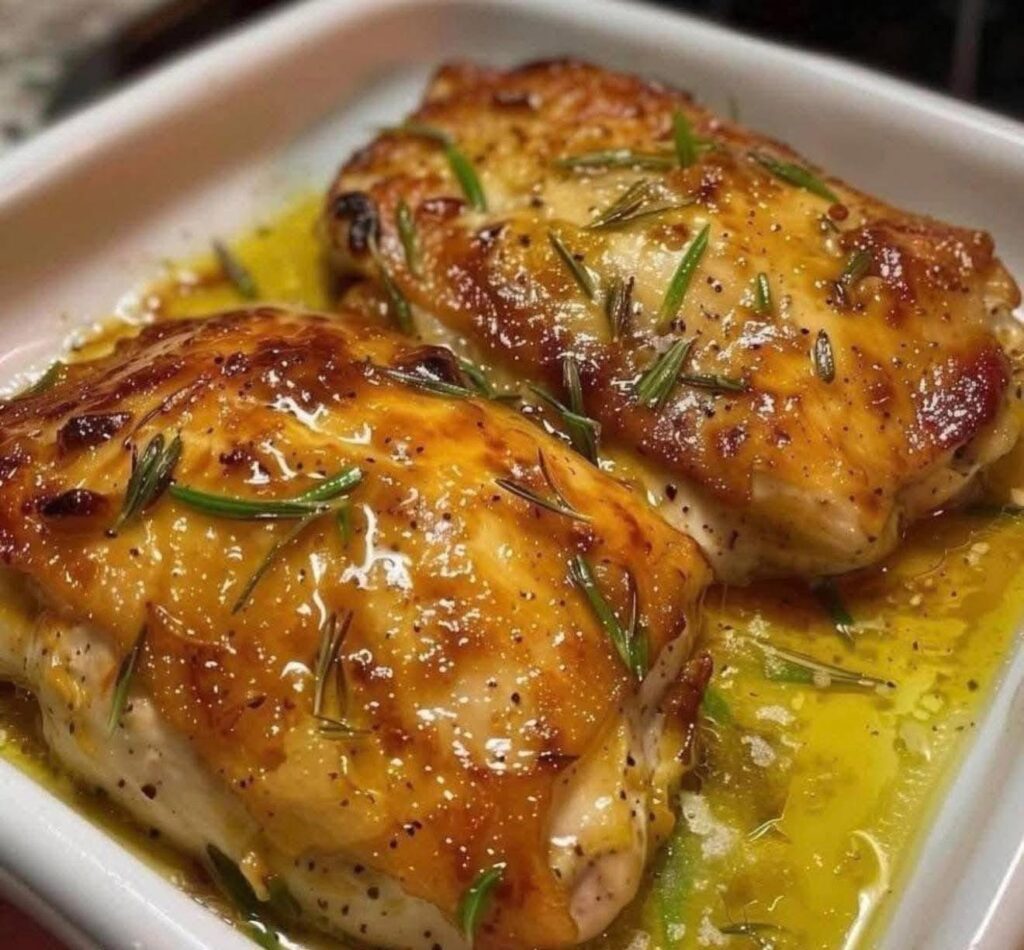
Pour the honey-garlic sauce evenly over the chicken breasts, ensuring they are well coated. If using fresh rosemary sprigs, place them around and on top of the chicken at this point.
Bake for 20-25 minutes, or until the chicken reaches an internal temperature of 165°F (74°C) when measured with a meat thermometer at the thickest part. The cooking time will vary depending on the thickness of your chicken breasts. Halfway through baking (around 10-12 minutes), you can baste the chicken with the sauce from the bottom of the pan to keep it moist and enhance the glaze.
For an extra glossy finish and deeper flavor, you can brush the chicken with the melted butter during the last 5 minutes of baking, if using.
Once cooked, remove the baking dish from the oven. Loosely tent the chicken with aluminum foil and let it rest for 5-10 minutes before slicing or serving. This crucial step allows the juices to redistribute throughout the meat, ensuring maximum tenderness and juiciness.
Garnish with fresh rosemary sprigs, if desired, and serve hot with your favorite side dishes.
Cooking Tips and Variations
Achieving Ultimate Tenderness: To truly ensure your chicken is “melt in your mouth,” consider brining your chicken breasts for 15-30 minutes in a solution of 1 tablespoon salt per 1 cup of water before cooking. Rinse thoroughly and pat dry. This adds moisture and helps break down muscle fibers. Also, avoid overcooking at all costs; use a meat thermometer to pull the chicken out precisely at 165°F (74°C).
Sauce Consistency: If your sauce seems too thin after baking, you can carefully pour the pan juices into a small saucepan after removing the chicken to rest. Bring to a simmer over medium heat and cook for a few minutes, stirring occasionally, until it thickens to your desired consistency. If it’s too thick, a splash of chicken broth or water will thin it out nicely.
Flavor Boosters: For an extra layer of flavor, add a pinch of red pepper flakes to the sauce for a subtle kick, or a teaspoon of smoked paprika for a smoky depth. A squeeze of fresh lemon juice over the finished dish brightens all the flavors. You can also add a tablespoon of grated fresh ginger to the sauce for an Asian-inspired twist.
ADVERTISEMENT
Herb Variations: While rosemary is fantastic, feel free to experiment with other herbs. Thyme or oregano would also work beautifully, either dried in the sauce or fresh sprigs added during baking. A mix of Italian herbs can create a different, yet equally delicious, flavor profile.
Sweetness Adjustment: If you prefer a less sweet sauce, reduce the honey by a tablespoon. Conversely, for a sweeter glaze, add an extra teaspoon or two of honey.
Serving Suggestions: This versatile chicken pairs wonderfully with so many sides. Serve it alongside fluffy white rice or quinoa to soak up all that delicious sauce. Creamy mashed potatoes, roasted asparagus, green beans almandine, or a simple side salad with a light vinaigrette are also excellent choices. For a heartier meal, consider serving it with roasted baby potatoes or sweet potato wedges.
Chicken Thighs Option: While this recipe is designed for chicken breasts, you can absolutely use boneless, skinless chicken thighs. They tend to be more forgiving and stay even juicier. Adjust baking time to 25-30 minutes, or until they reach an internal temperature of 175°F (80°C) for optimal tenderness.
Storage and Reheating
Storage: Allow any leftover “Melt in your Mouth” chicken to cool completely before transferring it to an airtight container. Store in the refrigerator for up to 3-4 days. For longer storage, you can freeze the cooked chicken and sauce in a freezer-safe container or bag for up to 2-3 months. Thaw overnight in the refrigerator before reheating.
Reheating:
Oven Method (Recommended for best results): Preheat your oven to 300°F (150°C). Place the chicken and any remaining sauce in an oven-safe dish. Add a tablespoon or two of chicken broth or water to the dish to help keep the chicken moist. Cover tightly with foil and heat for 15-20 minutes, or until thoroughly heated through. This method helps prevent the chicken from drying out and maintains its tender texture.
Stovetop Method: If reheating a single serving or two, you can gently warm the chicken in a skillet over medium-low heat with a splash of water or broth. Cover the skillet to trap steam and heat for 5-7 minutes, flipping once, until warmed through. Be careful not to overheat.
Microwave Method: While convenient, the microwave can sometimes dry out chicken. Place the chicken and a spoonful of sauce in a microwave-safe dish. Cover loosely and heat in 30-second intervals, stirring or flipping, until hot. This method is best for very quick reheating and for individual servings.
Always ensure the chicken is heated to an internal temperature of 165°F (74°C) for food safety.
Frequently Asked Questions
Can I prepare the chicken ahead of time?
Yes, you can absolutely do some prep work in advance! You can whisk together the honey-garlic sauce up to 2 days ahead and store it in an airtight container in the refrigerator. You can also pat the chicken dry and season it with salt and pepper the night before, storing it covered in the fridge. For maximum flavor infusion, you can even marinate the chicken in the sauce for 30 minutes to 2 hours before baking, though be cautious not to marinate for too long with ingredients like apple cider vinegar, as it can start to “cook” the chicken.
Why is my chicken not as tender as expected?
The most common reason for tough chicken is overcooking. Chicken breasts are lean and dry out quickly if cooked past their ideal internal temperature. Always use a meat thermometer and aim for 165°F (74°C) at the thickest part. Another factor could be not letting the chicken rest after baking; this crucial step allows the juices to redistribute, resulting in much juicier and more tender meat. Finally, ensure your chicken breasts aren’t excessively large or thick, as they can cook unevenly.
Can I make this recipe spicier?
Absolutely! To add a kick, incorporate 1/2 to 1 teaspoon of red pepper flakes into the honey-garlic sauce. You could also add a dash of your favorite hot sauce or a pinch of cayenne pepper. Adjust the amount to your personal preference for heat.
What if I don’t have apple cider vinegar?
If you don’t have apple cider vinegar, you can substitute it with an equal amount of white wine vinegar or rice vinegar. Even a squeeze of fresh lemon juice can work in a pinch, though it might alter the flavor profile slightly. The vinegar adds a crucial touch of acidity that balances the sweetness of the honey and brightens the overall sauce.
ADVERTISEMENT