ADVERTISEMENT
Why it’s bad: The high heat and harsh detergents can dull the blade. The jostling against other items can nick and damage the edge. Over time, your once-sharp knives become dull, difficult to use, and potentially dangerous.
The damage: Dull knives require more pressure to cut, increasing the risk of slipping and causing injury. The blade’s edge can also become pitted or corroded.
What to do instead: Wash sharp knives by hand with warm, soapy water. Dry immediately with a soft cloth. Never leave them soaking in water (which can damage the handle and dull the blade).
ADVERTISEMENT
Pro tip: Store knives in a wooden block or on a magnetic strip, not loose in a drawer where they can knock against each other.
2. Cast Iron Cookware (Destroys the Seasoning)
Why it’s bad: Cast iron requires a layer of seasoning (polymerized oil) to create a non-stick surface and prevent rust. Dishwasher detergents are designed to strip away grease and oil—exactly what you don’t want on your cast iron.
The damage: The seasoning will be stripped away, leaving the pan vulnerable to rust and sticking. The high heat can also cause cracking or warping.
What to do instead: Wash cast iron by hand with warm water and a stiff brush (use a small amount of mild dish soap if needed, but avoid harsh detergents). Dry immediately and rub with a thin layer of oil to maintain the seasoning.
Pro tip: For stuck-on food, scrub with coarse salt and a paper towel, then rinse and dry.
3. Fine China and Crystal (Etches and Chips)
Why it’s bad: The high heat and harsh detergents can etch (chemically eat away) the glaze and any metallic accents (gold, platinum, silver). The intense water pressure and jostling can cause chipping and cracking.
The damage: Faded patterns, cloudy film, rough texture, and chips or cracks.
What to do instead: Wash fine china and crystal by hand with warm, soapy water and a soft cloth. Rinse with cool water. Dry immediately with a soft, lint-free towel.
Pro tip: Place a soft towel in the bottom of the sink to protect items from chipping. Never stack china while washing.
4. Wooden Utensils and Cutting Boards (Warp and Crack)
Why it’s bad: Wood is porous and absorbs water. The high heat and prolonged moisture in a dishwasher cause wood to swell, warp, and crack.
The damage: Warped utensils that won’t lie flat. Cracked cutting boards that harbor bacteria. Dry, splintered surfaces.
What to do instead: Wash wooden items by hand with warm, soapy water. Rinse immediately. Dry with a towel and allow to air dry completely before storing.
Pro tip: Periodically rub wooden items with mineral oil or food-grade wax to prevent drying and cracking.
5. Non-Stick Pans (Destroys the Coating)
Why it’s bad: The high heat and harsh detergents can break down the non-stick coating. The abrasive action of water jets and contact with other items can scratch and chip the surface.
The damage: Peeling, flaking, or scratched coating that sticks to food and may be toxic if ingested.
What to do instead: Wash non-stick pans by hand with warm, soapy water and a soft sponge. Avoid abrasive scrubbers. Dry immediately.
Pro tip: Use silicone, wood, or plastic utensils to avoid scratching the coating.
6. Insulated Mugs and Thermos Bottles (Lose Insulation)
Why it’s bad: Many insulated mugs and thermoses have a vacuum seal between two walls of metal or plastic. The high heat can break the seal, ruining the insulation.
The damage: The mug or thermos will no longer keep drinks hot or cold. Condensation may form on the outside. The seal may be permanently compromised.
What to do instead: Wash by hand with warm, soapy water and a bottle brush. Rinse thoroughly. Dry with a towel.
Pro tip: Check the manufacturer’s instructions. Some high-end brands (like Yeti) claim their products are dishwasher-safe, but hand-washing extends their life.
7. Copper, Bronze, or Brass Items (Discolor)
Why it’s bad: The harsh detergents react with these metals, causing discoloration, tarnishing, or pitting.
The damage: Dark spots, greenish film, or uneven patina that is difficult or impossible to remove.
What to do instead: Wash by hand with warm, soapy water and a soft cloth. Rinse and dry immediately. Use a specialized metal polish to maintain shine.
Pro tip: For heavy tarnish, use a paste of lemon juice and salt, then rinse and dry.
8. Delicate Glassware (Etches and Breaks)
Why it’s bad: The high heat and harsh detergents can etch delicate glass (especially hand-blown or antique). The water pressure and jostling can cause chipping and breakage.
The damage: Cloudy film, rough texture, chips, cracks, or complete breakage.
What to do instead: Wash delicate glassware by hand with warm water and a mild detergent. Use a soft cloth or sponge. Rinse with cool water. Dry with a soft, lint-free towel.
Pro tip: Place a towel in the bottom of the sink to cushion glassware. Never stack glasses while washing.
Bonus: The Dishwasher Itself (What Not to Do)
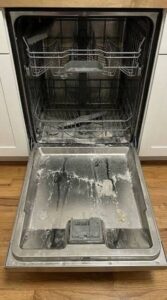
Don’t overload the dishwasher. Overloading prevents water and detergent from circulating properly, leading to poor cleaning and potential damage to items.
Don’t use too much detergent. Excess detergent leaves residue on dishes and can etch glassware.
Don’t leave food particles on dishes. Large food particles can clog the filter and spray arms. Scrape, don’t pre-rinse (modern dishwashers are designed to handle residue).
Don’t block the spray arms. Large items (cutting boards, baking sheets) can block water flow. Place them on the sides or bottom rack.
Don’t put dishwasher-safe plastics on the bottom rack. Plastics are better on the top rack, where the heat is lower.
What CAN Go in the Dishwasher (A Quick Reference)
Item Dishwasher-Safe? Notes
Stainless steel pots and pans Yes Avoid harsh detergents; dry immediately to prevent water spots
Ceramic plates and bowls (plain) Yes Avoid if they have metallic accents
Glass baking dishes Yes Avoid sudden temperature changes (don’t put hot dish in cold water)
Silicone utensils Yes Top rack only
Plastic containers (dishwasher-safe) Yes Top rack only
Everyday flatware Yes Place handles down, forks and spoons mixed to prevent nesting
For Complete Cooking STEPS Please Head On Over To Next Page Or Open button (>) and don’t forget to SHARE with your Facebook friends
See more on the next page to continue reading →
ADVERTISEMENT